




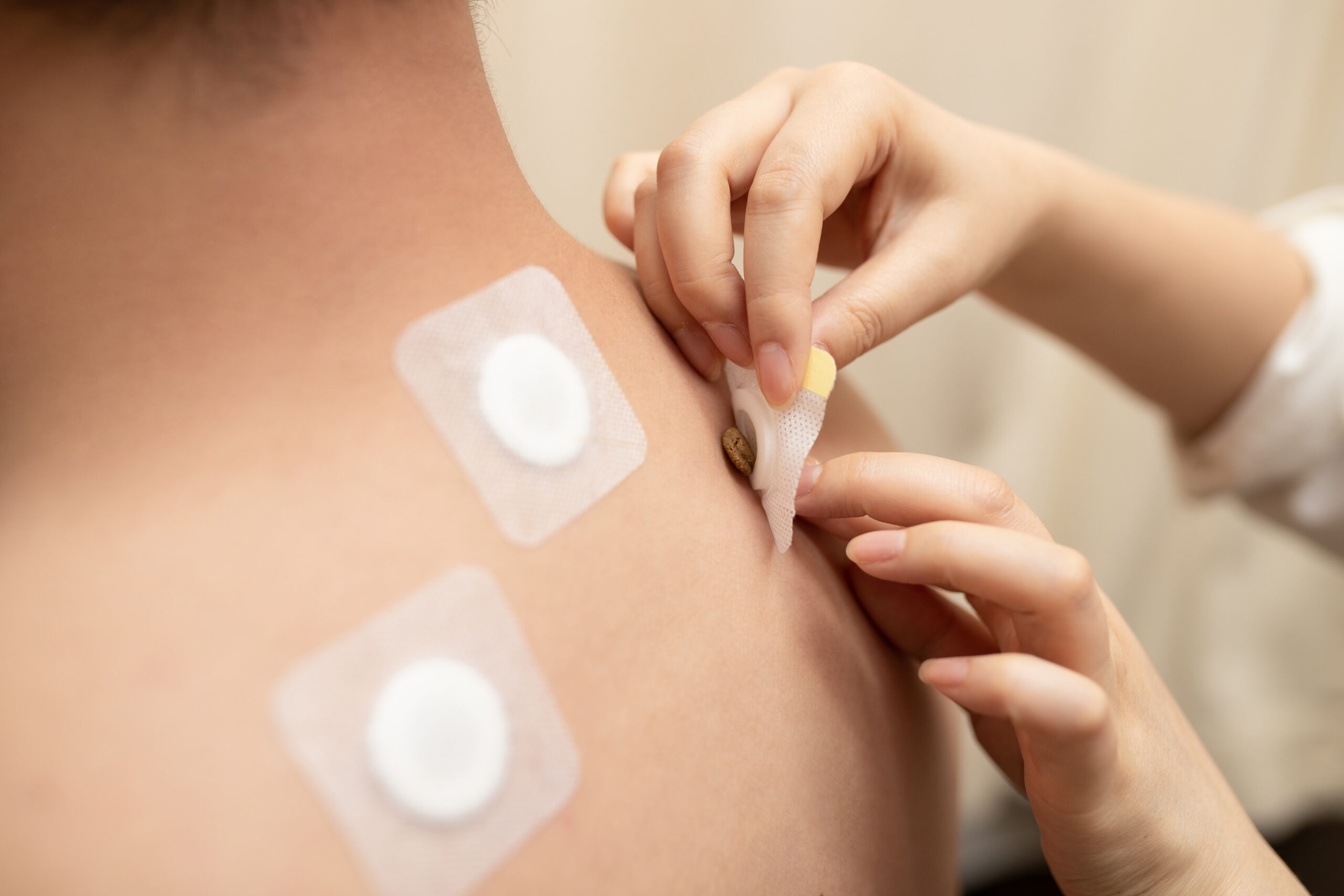
As summer approaches, it’s once again time for Tianjiu therapy. In recent years, Tianjiu has grown in popularity as a Traditional Chinese Medicine (TCM) wellness practice. But do people truly understand its meaning and benefits?
Tianjiu involves applying warming herbal pastes to specific acupuncture points, causing local skin redness and stimulation. This promotes meridian warming, cold dispersion, improved circulation, dampness removal, pain relief, and most importantly, reinforces the body’s yang energy. It’s rooted in the TCM principles of “treating winter illnesses in summer” and “preventive care before illness arises.”
Why is Tianjiu only performed in winter and summer, and on specific dates?
TCM emphasizes harmony between humans and nature. Treatments are timed with the solar terms to synchronize internal balance. Summer Tianjiu is administered during the hottest days of the year—known as the Sanfu period—which is divided into early, mid, and late phases. Administering warming therapy during this peak heat supports the body’s natural yang energy.
Tianjiu can benefit people of all ages, though the acupuncture points selected vary based on physiological and pathological differences:
– Children: With weaker constitutions and developing organs, they’re prone to infections. According to TCM, they exhibit “three deficiencies and two excesses”—underdeveloped lungs, spleen, and kidneys, but relatively strong heart and liver. Treatments often target the lungs, spleen, and kidneys to address allergies, asthma, frequent colds, or digestive issues.
– Adults and young adults: Due to stress, diet, emotional strain, and overwork, many develop specific imbalances. Point selection is based on individual constitution—deficiencies in qi, yin/yang, blood stagnation, phlegm-dampness, etc.
– Elderly: Organ function gradually weakens, and qi, blood, yin, and yang decline. Points along the Ren and Du meridians are often chosen to regulate overall vitality and circulation.
Common Acupoints Used in Tianjiu
Most points chosen have general health-boosting and restorative properties and are located along the Ren and Du meridians, as well as Back Shu points.
You may have heard the phrase “unblocking the Ren and Du meridians.” These two pathways are considered the “sea of yin” and “sea of yang” in the body, governing the twelve main meridians and maintaining yin-yang balance. Stimulating them enhances circulation and harmonizes the system. In women, the Ren meridian is especially vital for menstrual and reproductive health.
Back Shu points are specific locations on the back where organ energy is reflected, including Heart Shu, Lung Shu, and Kidney Shu. Stimulating these points can help treat related conditions.
Commonly used points include:
– Du Meridian: Dazhui (GV14), Mingmen (GV4), Yaoyangguan (GV3), Yaoshu
– Ren Meridian: Guanyuan (CV4), Qihai (CV6), Zhongwan (CV12)
– Back Shu Points: Feishu (LU), Xinshu (HT), Pishu (SP), Ganshu (LV), Shenshu (KI)
– Leg/Foot Points: Zusanli (ST36), Sanyinjiao (SP6), Yanglingquan (GB34)
Indications
Tianjiu is widely used for chronic conditions, such as fatigue, cold hands and feet, frequent colds, respiratory issues (asthma, nasal allergies), gynecological problems (menstrual pain, irregular cycles), digestive issues (gastritis, poor appetite), and joint pain.
It’s suitable for most people, but the following should consult a physician before treatment:
– Pregnant women
– Those with diabetes
– People with skin allergies
– Fever, sore throat, or cold symptoms on treatment day
– G6PD deficiency
– Menstruating individuals
– Children under age 2
Dr Chan Wan Yu
Registered Chinese Medicine Practitioner of the Chinese Medicine Council of Hong Kong

